

Nicholas C. Rush
University of North Dakota · Waterfowl Conservation · Developer
Commits
Quotes on discipline and excellence
In the midst of chaos, there is also opportunity.
You will succeed in whatever you choose to do, and light will shine on the road ahead of you.
No longer talk at all about the kind of man that a good man ought to be, but be such.
He becometh poor that dealeth with a slack hand: but the hand of the diligent maketh rich.
First say to yourself Who you wish to be: then do accordingly what you are doing.
But as for you, be strong and do not give up, for your work will be rewarded.
We become just by doing just acts, temperate by doing temperate acts, brave by doing brave acts.
Do not love sleep, lest you come to poverty; open your eyes, and you will be satisfied with bread.
It is circumstances that show what men are.
As iron sharpens iron, so one person sharpens another.
The superior man is modest in his speech, but exceeds in his actions.
He who walks with wise men will be wise, but the companion of fools will suffer harm.
Fire tries gold, misfortune tries brave men.
The good fighters of old first put themselves beyond the possibility of defeat, and then waited for an opportunity of defeating the enemy.
But Jesus beheld them, and said unto them, With men this is impossible; but with God all things are possible.
The mind converts and changes every hindrance to its activity into an aid; and so that which is a hindrance is made a furtherance to an act.
A little one shall become a thousand, and a small one a strong nation: I the LORD will hasten it in his time.
If there want but one basket of earth to complete the work, and I stop, the stopping is my own work.
The victory over self is of all victories the first and best.
Of things some are in our power, and others are not.
To have faults and not to reform them,—this, indeed, should be pronounced having faults.
Man’s character is his fate.
If a perfectly moral man entered this world, he would be humiliated and impaled.
The mechanic, who wishes to do his work well, must first sharpen his tools.
Today is victory over yourself of yesterday; tomorrow is your victory over lesser men.
Research
Conference posters and abstracts, newest first.
Gallery


Logos
∞
Pursuit of wisdom
He becometh poor that dealeth with a slack hand: but the hand of the diligent maketh rich.
∞Proverbs 10:4
































Nothing on that shelf yet.
Verses
-
01Isaiah 60:22
A little one shall become a thousand, and a small one a strong nation: I the LORD will hasten it in his time.
-
02Luke 1:37
For with God, nothing shall be impossible.
-
03Proverbs 10:4
He becometh poor that dealeth with a slack hand: but the hand of the diligent maketh rich.
-
04John 13:7
Jesus replied, “You do not realize now what I am doing, but later you will understand.”
-
051 Corinthians 13:7
Love bears all things, believes all things, hopes all things, endures all things.
-
06Proverbs 20:13
Do not love sleep, lest you come to poverty; open your eyes, and you will be satisfied with bread.
-
07Matthew 19:26
But Jesus beheld them, and said unto them, With men this is impossible; but with God all things are possible.
-
08Romans 8:28
Those who love God and are loved by him can have confidence that he is working through all of life’s circumstances to bring good out of bad, light out of darkness, joy out of sorrow.
-
09Proverbs 27:17
As iron sharpens iron, so one person sharpens another.
-
10Psalm 118:18
The Lord has disciplined me severely, but he has not given me over to death.
-
11Job 22:28
You will succeed in whatever you choose to do, and light will shine on the road ahead of you.
-
12Genesis 31:49
May the Lord watch between you and me when we are away from each other.
-
13Mark 10:9
What God has joined together, let no one separate.
-
14Proverbs 13:20
He who walks with wise men will be wise, but the companion of fools will suffer harm.
-
152 Chronicles 15:7
But as for you, be strong and do not give up, for your work will be rewarded.
-
16Romans 8:18
For I consider that the sufferings of this present time are not worthy to be compared with the glory that is to be revealed in us.
Passages
333 lines from the 15 books on this shelf whose texts are public domain, each checked word for word against the original.
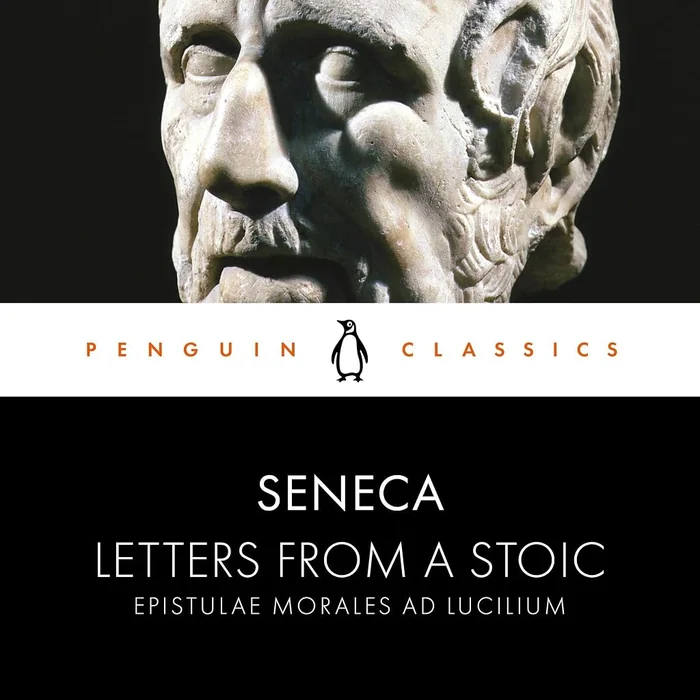
Meditations Marcus Aureliustr. George Long 22
-
Our life is a warfare, and a mere pilgrimage. Fame after life is no better than oblivion.
Book II.15
-
Do nothing against thy will, nor contrary to the community, nor without due examination, nor with reluctancy. Affect not to set out thy thoughts with curious neat language. Be neither a great talker, nor a great undertaker.
Book III.5
-
Never esteem of anything as profitable, which shall ever constrain thee either to break thy faith, or to lose thy modesty; to hate any man, to suspect, to curse, to dissemble, to lust after anything, that requireth the secret of walls or veils.
Book III.8
-
Hast thou reason? I have. Why then makest thou not use of it? For if thy reason do her part, what more canst thou require?
Book IV.11
-
Not as though thou hadst thousands of years to live. Death hangs over thee: whilst yet thou livest, whilst thou mayest, be good.
Book IV.14
-
Thou must be like a promontory of the sea, against which though the waves beat continually, yet it both itself stands, and about it are those swelling waves stilled and quieted.
Book IV.40
-
In the morning when thou findest thyself unwilling to rise, consider with thyself presently, it is to go about a man's work that I am stirred up. Am I then yet unwilling to go about that, for which I myself was born and brought forth into this world?
Book V.1
-
Such as thy thoughts and ordinary cogitations are, such will thy mind be in time. For the soul doth as it were receive its tincture from the fancies, and imaginations.
Book V.15
-
The best kind of revenge is, not to become like unto them.
Book VI.5
-
Whensoever by some present hard occurrences thou art constrained to be in some sort troubled and vexed, return unto thyself as soon as may be, and be not out of tune longer than thou must needs.
Book VI.9
-
Do not ever conceive anything impossible to man, which by thee cannot, or not without much difficulty be effected; but whatsoever in general thou canst Conceive possible and proper unto any man, think that very possible unto thee also.
Book VI.18
-
The ambitious supposeth another man's act, praise and applause, to be his own happiness; the voluptuous his own sense and feeling; but he that is wise, his own action.
Book VI.46
-
Look within; within is the fountain of all good. Such a fountain, where springing waters can never fail, so thou dig still deeper and deeper.
Book VII.31
-
The art of true living in this world is more like a wrestler's, than a dancer's practice. For in this they both agree, to teach a man whatsoever falls upon him, that he may be ready for it, and that nothing may cast him down.
Book VII.33
-
Most justly have these things happened unto thee: why dost not thou amend? O but thou hadst rather become good to-morrow, than to be so to-day.
Book VIII.21
-
Is the cucumber bitter? set it away. Brambles are in the way? avoid them. Let this suffice.
Book VIII.48
-
Many of those things that trouble and straiten thee, it is in thy power to cut off, as wholly depending from mere conceit and opinion; and then thou shalt have room enough.
Book IX.30
-
Make it not any longer a matter of dispute or discourse, what are the signs and proprieties of a good man, but really and actually to be such.
Book X.18
-
Will any contemn me? let him look to that, upon what grounds he does it: my care shall be that I may never be found either doing or speaking anything that doth truly deserve contempt.
Book XI.12
-
I have often wondered how it should come to pass, that every man loving himself best, should more regard other men's opinions concerning himself than his own.
Book XII.3
-
Use thyself even unto those things that thou doest at first despair of. For the left hand we see, which for the most part lieth idle because not used; yet doth it hold the bridle with more strength than the right, because it hath been used unto it.
Book XII.5
-
If it be not fitting, do it not. If it be not true, speak it not. Ever maintain thine own purpose and resolution free from all compulsion and necessity.
Book XII.13
The Discourses of Epictetus Epictetustr. George Long 22
-
Me, in chains? You may fetter my leg, but my will not even Zeus himself can overpower.
Discourses I.1
-
Nothing great, said Epictetus, is produced suddenly, since not even the grape or the fig is.
Discourses I.15
-
It is circumstances (difficulties) which show what men are. Therefore when a difficulty falls upon you, remember that God, like a trainer of wrestlers, has matched you with a rough young man.
Discourses I.24
-
For remember this general truth, that it is we who squeeze ourselves, who put ourselves in straits; that is, our opinions squeeze us and put us in straits.
Discourses I.25
-
Each man is improved and preserved by corresponding acts, the carpenter by acts of carpentry, the grammarian by acts of grammar.
Discourses II.9
-
The beginning of philosophy, to him at least who enters on it in the right way and by the door is a consciousness of his own weakness and inability about necessary things
Discourses II.11
-
When I see a man anxious, I say, What does this man want? If he did not want something which is not in his power, how could he be anxious?
Discourses II.13
-
For it is impossible for a man to begin to learn that which he thinks that he knows.
Discourses II.17
-
Every habit and faculty is maintained and increased by the corresponding actions: the habit of walking by walking, the habit of running by running. If you would be a good reader, read; if a writer, write.
Discourses II.18
-
What then should a man say on the occasion of each painful thing? It was for this that I exercised myself, for this I disciplined myself.
Discourses III.10
-
If a man has frequent intercourse with others either for talk, or drinking together, or generally for social purposes, he must either become like them, or change them to his own fashion.
Discourses III.16
-
Know you not that a good man does nothing for the sake of appearance, but for the sake of doing right?
Discourses III.24
-
For it is not shameful to be without something to eat, but not to have reason sufficient for keeping away fear and sorrow.
Discourses III.26
-
He is free who lives as he wishes to live; who is neither subject to compulsion nor to hindrance, nor to force
Discourses IV.1
-
If it is good to use attention tomorrow, how much better is it to do so today?
Discourses IV.12
-
Men are disturbed not by the things which happen, but by the opinions about the things
Encheiridion V
-
It is the act of an ill-instructed man to blame others for his own bad condition; it is the act of one who has begun to be instructed, to lay the blame on himself; and of one whose instruction is completed, neither to blame another, nor himself.
Encheiridion V
-
Seek not that the things which happen should happen as you wish; but wish the things which happen to be as they are, and you will have a tranquil flow of life.
Encheiridion VIII
-
Disease is an impediment to the body, but not to the will, unless the will itself chooses. Lameness is an impediment to the leg, but not to the will.
Encheiridion IX
-
Never say about anything, I have lost it, but say I have restored it.
Encheiridion XI
-
For this is your duty, to act well the part that is given to you; but to select the part, belongs to another.
Encheiridion XVII
-
Everything has two handles, the one by which it may be borne, the other by which it may not.
Encheiridion XLIII
Enchiridion Epictetustr. George Long 23
-
There are things which are within our power, and there are things which are beyond our power. Within our power are opinion, aim, desire, aversion, and, in one word, whatever affairs are our own.
Chapter I
-
Men are disturbed not by things, but by the views which they take of things.
Chapter V
-
It is the action of an uninstructed person to reproach others for his own misfortunes; of one entering upon instruction, to reproach himself; and one perfectly instructed, to reproach neither others nor himself.
Chapter V
-
Demand not that events should happen as you wish; but wish them to happen as they do happen, and you will go on well.
Chapter VIII
-
Sickness is an impediment to the body, but not to the will unless itself pleases. Lameness is an impediment to the leg, but not to the will; and say this to yourself with regard to everything that happens.
Chapter IX
-
Upon every accident, remember to turn toward yourself and inquire what faculty you have for its use. If you encounter a handsome person, you will find continence the faculty needed; if pain, then fortitude; if reviling, then patience.
Chapter X
-
Is a little oil spilled or a little wine stolen? Say to yourself, “This is the price paid for peace and tranquillity; and nothing is to be had for nothing.
Chapter XII
-
If you would improve, be content to be thought foolish and dull with regard to externals. Do not desire to be thought to know anything; and though you should appear to others to be somebody, distrust yourself.
Chapter XIII
-
A man’s master is he who is able to confer or remove whatever that man seeks or shuns. Whoever then would be free, let him wish nothing, let him decline nothing, which depends on others; else he must necessarily be a slave.
Chapter XIV
-
Remember that you are an actor in a drama of such sort as the Author chooses—if short, then in a short one; if long, then in a long one.
Chapter XVII
-
You can be unconquerable if you enter into no combat in which it is not in your own power to conquer.
Chapter XIX
-
Let death and exile, and all other things which appear terrible, be daily before your eyes, but death chiefly; and you will never entertain an abject thought, nor too eagerly covet anything.
Chapter XXI
-
If a person had delivered up your body to some passer-by, you would certainly be angry. And do you feel no shame in delivering up your own mind to any reviler, to be disconcerted and confounded?
Chapter XXVIII
-
In every affair consider what precedes and what follows, and then undertake it. Otherwise you will begin with spirit, indeed, careless of the consequences, and when these are developed, you will shamefully desist.
Chapter XXIX
-
Consider first, man, what the matter is, and what your own nature is able to bear.
Chapter XXIX
-
When you do anything from a clear judgment that it ought to be done, never shrink from being seen to do it, even though the world should misunderstand it; for if you are not acting rightly, shun the action itself; if you are, why fear those who wrongly censure you?
Chapter XXXV
-
If you have assumed any character beyond your strength, you have both demeaned yourself ill in that and quitted one which you might have supported.
Chapter XXXVII
-
As in walking you take care not to tread upon a nail, or turn your foot, so likewise take care not to hurt the ruling faculty of your mind.
Chapter XXXVIII
-
Everything has two handles: one by which it may be borne, another by which it cannot.
Chapter XLIII
-
Never proclaim yourself a philosopher, nor make much talk among the ignorant about your principles, but show them by actions. Thus, at an entertainment, do not discourse how people ought to eat, but eat as you ought.
Chapter XLVI
-
The condition and characteristic of a vulgar person is that he never looks for either help or harm from himself, but only from externals. The condition and characteristic of a philosopher is that he looks to himself for all help or harm.
Chapter XLVIII
-
If, therefore, you will be negligent and slothful, and always add procrastination to procrastination, purpose to purpose, and fix day after day in which you will attend to yourself, you will insensibly continue to accomplish nothing and, living and dying, remain of vulgar mind.
Chapter L
-
Let whatever appears to be the best be to you an inviolable law.
Chapter L
The Republic Platotr. Jowett 22
-
he who is of a calm and happy nature will hardly feel the pressure of age, but to him who is of an opposite disposition youth and age are equally a burden.
Book I
-
Now the worst part of the punishment is that he who refuses to rule is liable to be ruled by one who is worse than himself.
Book I
-
And at his side let us place the just man in his nobleness and simplicity, wishing, as Aeschylus says, to be and not to seem good.
Book II
-
Let him be the best of men, and let him be thought the worst; then he will have been put to the proof; and we shall see whether he will be affected by the fear of infamy and its consequences.
Book II
-
And ugliness and discord and inharmonious motion are nearly allied to ill words and ill nature, as grace and harmony are the twin sisters of goodness and virtue and bear their likeness.
Book III
-
And he who mingles music with gymnastic in the fairest proportions, and best attempers them to the soul, may be rightly called the true musician and harmonist in a far higher sense than the tuner of the strings.
Book III
-
he sets in order his own inner life, and is his own master and his own law, and at peace with himself
Book IV
-
The argument seems to have reached a height from which, as from some tower of speculation, a man may look down and see that virtue is one, but that the forms of vice are innumerable
Book IV
-
When he thinks that he is reasoning he is really disputing, just because he cannot define and divide, and so know that of which he is speaking; and he will pursue a merely verbal opposition in the spirit of contention and not of fair discussion.
Book V
-
the fact is that when a man is out of his depth, whether he has fallen into a little swimming bath or into mid ocean, he has to swim all the same.
Book V
-
He whose desires are drawn towards knowledge in every form will be absorbed in the pleasures of the soul, and will hardly feel bodily pleasure—I mean, if he be a true philosopher and not a sham one.
Book VI
-
Then how can he who has magnificence of mind and is the spectator of all time and all existence, think much of human life?
Book VI
-
Do not great crimes and the spirit of pure evil spring out of a fulness of nature ruined by education rather than from any inferiority, whereas weak natures are scarcely capable of any very great good or very great evil?
Book VI
-
Do you think that the possession of all other things is of any value if we do not possess the good? or the knowledge of all other things if we have no knowledge of beauty and goodness?
Book VI
-
Will he not fancy that the shadows which he formerly saw are truer than the objects which are now shown to him?
Book VII
-
Whereas the truth is that the State in which the rulers are most reluctant to govern is always the best and most quietly governed, and the State in which they are most eager, the worst.
Book VII
-
Bodily exercise, when compulsory, does no harm to the body; but knowledge which is acquired under compulsion obtains no hold on the mind.
Book VII
-
The excess of liberty, whether in States or individuals, seems only to pass into excess of slavery.
Book VIII
-
In heaven, I replied, there is laid up a pattern of it, methinks, which he who desires may behold, and beholding, may set his own house in order
Book IX
-
Virtue is free, and as a man honours or dishonours her he will have more or less of her; the responsibility is with the chooser—God is justified.
Book X
-
Even for the last comer, if he chooses wisely and will live diligently, there is appointed a happy and not undesirable existence. Let not him who chooses first be careless, and let not the last despair.
Book X
-
Wherefore my counsel is, that we hold fast ever to the heavenly way and follow after justice and virtue always, considering that the soul is immortal and able to endure every sort of good and every sort of evil.
Book X
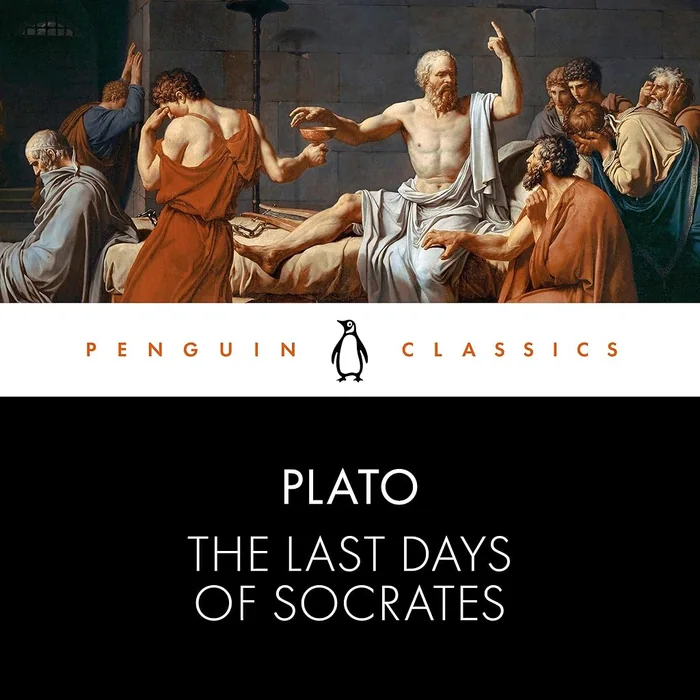
The Last Days of Socrates Platotr. Jowett 22
-
Never mind the manner, which may or may not be good; but think only of the truth of my words, and give heed to that: let the speaker speak truly and the judge decide justly.
Apology
-
Well, although I do not suppose that either of us knows anything really beautiful and good, I am better off than he is,—for he knows nothing, and thinks that he knows; I neither know nor think that I know.
Apology
-
the truth is, O men of Athens, that God only is wise; and by his answer he intends to show that the wisdom of men is worth little or nothing
Apology
-
He, O men, is the wisest, who, like Socrates, knows that his wisdom is in truth worth nothing.
Apology
-
Then I knew that not by wisdom do poets write poetry, but by a sort of genius and inspiration; they are like diviners or soothsayers who also say many fine things, but do not understand the meaning of them.
Apology
-
And yet, I know that my plainness of speech makes them hate me, and what is their hatred but a proof that I am speaking the truth?
Apology
-
a man who is good for anything ought not to calculate the chance of living or dying; he ought only to consider whether in doing anything he is doing right or wrong—acting the part of a good man or of a bad.
Apology
-
For wherever a man’s place is, whether the place which he has chosen or that in which he has been placed by a commander, there he ought to remain in the hour of danger; he should not think of death or of anything but of disgrace.
Apology
-
For the fear of death is indeed the pretence of wisdom, and not real wisdom, being a pretence of knowing the unknown; and no one knows whether death, which men in their fear apprehend to be the greatest evil, may not be the greatest good.
Apology
-
Is not this ignorance of a disgraceful sort, the ignorance which is the conceit that a man knows what he does not know?
Apology
-
I tell you that virtue is not given by money, but that from virtue comes money and every other good of man, public as well as private.
Apology
-
I shall never alter my ways, not even if I have to die many times.
Apology
-
Nothing will injure me, not Meletus nor yet Anytus—they cannot, for a bad man is not permitted to injure a better than himself.
Apology
-
I am that gadfly which God has attached to the state, and all day long and in all places am always fastening upon you, arousing and persuading and reproaching you.
Apology
-
he who will fight for the right, if he would live even for a brief space, must have a private station and not a public one.
Apology
-
I made up my mind that I would run the risk, having law and justice with me, rather than take part in your injustice because I feared imprisonment and death.
Apology
-
But I have been always the same in all my actions, public as well as private, and never have I yielded any base compliance to those who are slanderously termed my disciples, or to any other.
Apology
-
I say again that daily to discourse about virtue, and of those other things about which you hear me examining myself and others, is the greatest good of man, and that the unexamined life is not worth living
Apology
-
I thought at the time that I ought not to do anything common or mean when in danger: nor do I now repent of the style of my defence; I would rather die having spoken after my manner, than speak in your manner and live.
Apology
-
The difficulty, my friends, is not to avoid death, but to avoid unrighteousness; for that runs faster than death.
Apology
-
If you think that by killing men you can prevent some one from censuring your evil lives, you are mistaken; that is not a way of escape which is either possible or honourable; the easiest and the noblest way is not to be disabling others, but to be improving yourselves.
Apology
-
Wherefore, O judges, be of good cheer about death, and know of a certainty, that no evil can happen to a good man, either in life or after death.
Apology
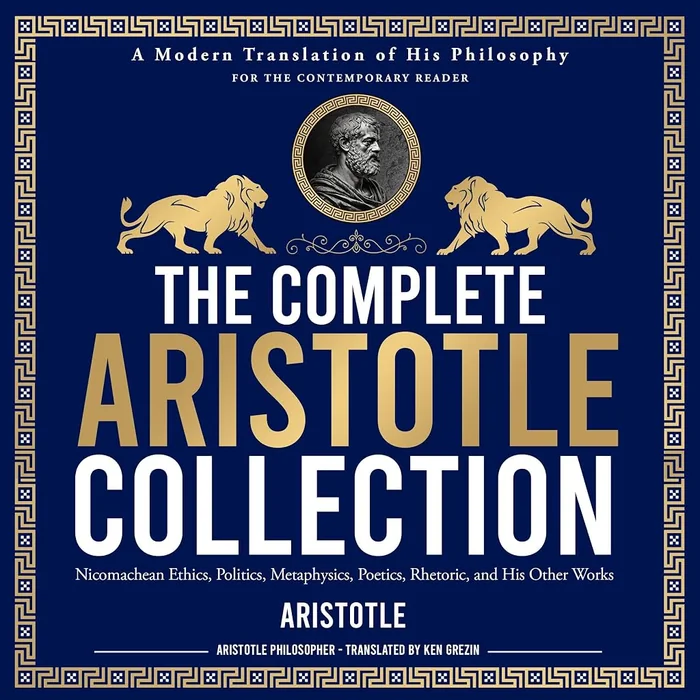
Nicomachean Ethics Aristotletr. Peters 22
-
like archers, with a mark in view, we shall be more likely to hit upon what is right
Book I.1
-
the man of education will seek exactness so far in each subject as the nature of the thing admits, it being plainly much the same absurdity to put up with a mathematician who tries to persuade instead of proving, and to demand strict demonstrative reasoning of a Rhetorician
Book I.1
-
And I draw no distinction between young in years, and youthful in temper and disposition: the defect to which I allude being no direct result of the time, but of living at the beck and call of passion, and following each object as it rises.
Book I.1
-
the Chief Good we feel instinctively must be something which is our own, and not easily to be taken from us
Book I.3
-
as it is not one swallow or one fine day that makes a spring, so it is not one day or a short time that makes a man blessed and happy.
Book I.5
-
So then, whether we are accustomed this way or that straight from childhood, makes not a small but an important difference, or rather I would say it makes all the difference.
Book II.1
-
it is by accustoming ourselves to despise objects of fear and stand up against them that we come to be brave
Book II.2
-
he is perfected in Self-Mastery who not only abstains from the bodily pleasures but is glad to do so; whereas he who abstains but is sorry to do it has not Self-Mastery
Book II.2
-
And so it is hard to be good: for surely hard it is in each instance to find the mean, just as to find the mean point or centre of a circle is not what any man can do, but only he who knows how
Book II.9
-
we should force ourselves off in the contrary direction, because we shall find ourselves in the mean after we have removed ourselves far from the wrong side, exactly as men do in straightening bent timber.
Book II.9
-
But in all cases we must guard most carefully against what is pleasant, and pleasure itself, because we are not impartial judges of it.
Book II.9
-
As for the plea, that a man did not know that habits are produced from separate acts of working, we reply, such ignorance is a mark of excessive stupidity.
Book III.7
-
death and wounds must be painful to the Brave man and against his will: still he endures these because it is honourable so to do or because it is dishonourable not to do so.
Book III.12
-
It is a property of him also to be open, both in his dislikes and his likings, because concealment is a consequent of fear.
Book IV.4
-
he is by no means apt to make laments about things which cannot be helped, or requests about those which are trivial
Book IV.4
-
there are many who can practise virtue in the regulation of their own personal conduct who are wholly unable to do it in transactions with their neighbour
Book V.2
-
no one would choose to live without friends though he should have all the other good things in the world
Book VIII.1
-
he will prefer a brief and great joy to a tame and enduring one, and to live nobly for one year rather than ordinarily for many, and one great and noble action to many trifling ones
Book IX.8
-
Now to take pains and to labour with a view to amusement is plainly foolish and very childish: but to amuse one’s self with a view to steady employment afterwards, as Anacharsis says, is thought to be right
Book X.5
-
it is either actually impossible, or a task of no mean difficulty, to alter by words what has been of old taken into men’s very dispositions
Book X.8
-
For he that lives in obedience to passion cannot hear any advice that would dissuade him, nor, if he heard, understand
Book X.8
-
he who is to be good must have been brought up and habituated well, and then live accordingly under good institutions, and never do what is low and mean, either against or with his will.
Book X.8
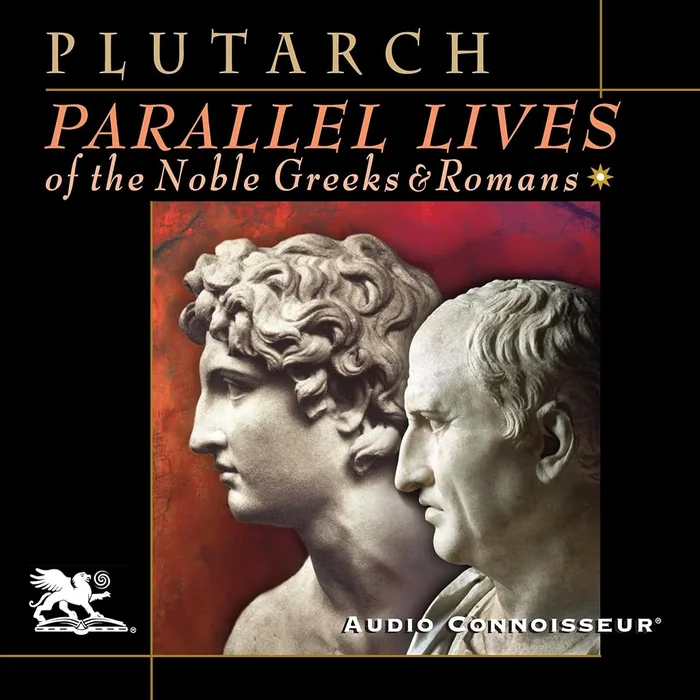
Parallel Lives Plutarchtr. Clough 24
-
He was careful to attribute his success, not to any skill or courage of his own, but to fortune, being willing to lessen his glory to avoid the ill-will of mankind.
Life of Nikias, VI
-
May there never be a Roman who thinks that too little which is enough to maintain him.
Life of Crassus, II
-
A great politician should not try to avoid unpopularity, but to gain such power and reputation as will enable him to rise above it.
Comparison of Nikias and Crassus, II
-
You see, fellow allies, that perseverance will do more than strength, and that many things which cannot be compassed all at once, yield to continued efforts; for endurance is invincible
Life of Sertorius, XVI
-
The misfortune of his lame leg was almost unnoticed, partly from the robust vigour of his frame, and also from his own cheerful acknowledgment of this defect, being always the first to joke about it.
Life of Agesilaus, II
-
Thus do ambitious men do more harm than good in a state, unless they have an unusual power of self-restraint.
Life of Agesilaus, VIII
-
When he was about to set sail, there was a violent wind on the sea, and the masters of the ships were unwilling to put out, but Pompeius embarking first and bidding them raise the anchor, cried, "It is necessary to sail; there is no necessity to live.
Life of Pompeius, L
-
Agesilaus, when he was the stronger, always forced his enemy to fight, and when weaker, always avoided a battle. By always practising this, the highest art of a general, he passed through his life without a single defeat
Comparison of Agesilaus and Pompeius, IV
-
I am writing biography, not history; and often a man's most brilliant actions prove nothing as to his true character, while some trifling incident, some casual remark or jest, will throw more light upon what manner of man he was than the bloodiest battle, the greatest array of armies, or the most important siege.
Life of Alexander, I
-
I myself had rather excel others in excellency of learning than in greatness of power.
Life of Alexander, VII
-
Alexander when a youth used to love and admire Aristotle more even than his father, for he said that the latter had enabled him to live, but that the former had taught him to live well.
Life of Alexander, VIII
-
And do you not know, that our career of conquest will come to an end on the day when we learn to live like those whom we have vanquished?
Life of Alexander, XL
-
We are told that when he was sitting as judge to hear men tried for their lives, he was wont to close one ear with his hand, while the prosecutor was speaking, in order that he might keep it unbiassed and impartial to listen to what the accused had to say in his defence.
Life of Alexander, XLII
-
On hearing this he took the helmet into his hands; but seeing all the horsemen around him eagerly watching him and coveting the water, he gave it back without tasting it.
Life of Alexander, XLII
-
Don't you think it is a matter for sorrow, that Alexander was king of so many nations at such an early age, and I have as yet done nothing of note?
Life of Cæsar, XI
-
notwithstanding all this, he did not make his feeble health an excuse for indulgence, but he made military service the means of his cure, by unwearied journeying, frugal diet, and by constantly keeping in the open air and enduring fatigue, struggling with his malady and keeping his body proof against its attacks.
Life of Cæsar, XVII
-
Just as honey irritates wounds and sores, so does true and sensible advice exasperate the unfortunate, if it be not of a gentle and soothing nature
Life of Phokion, II
-
Much of his influence, however, must be ascribed to his personal character; since a word or a gesture of a truly good man carries more weight than ten thousand eloquently argued speeches.
Life of Phokion, V
-
And once when he made some remark in a speech which was vociferously applauded, and he saw the whole assembly unanimous in its approval of his words, he turned to some of his friends and said, "Have I inadvertently said something bad?
Life of Phokion, VIII
-
You are able to force me to do what I do not wish, but you shall never force me to counsel what I do not approve.
Life of Phokion, IX
-
To thee, dear hearth, I entrust these remains of a good man; do you restore them to his fathers' tomb when the Athenians recover their senses.
Life of Phokion, XXXVII
-
I only hope they may not find fault with my life. But I will begin to speak, when I am not going to say something that were better unsaid.
Life of Cato, IV
-
He used to harden his body by vigorous exercises, training himself to endure both heat and snow with uncovered head, and to walk along the roads in all seasons without a vehicle.
Life of Cato, V
-
He would go into public without shoes and tunic after dinner, not seeking for reputation by the strangeness of the practice, but habituating himself to be ashamed only of what was shameful, and to despise everything else as indifferent.
Life of Cato, VI
The Analects Confuciustr. Legge 22
-
I will not be afflicted at men's not knowing me; I will be afflicted that I do not know men.
Book I.XVI
-
Learning without thought is labour lost; thought without learning is perilous.
Book II.XV
-
When you know a thing, to hold that you know it; and when you do not know a thing, to allow that you do not know it;— this is knowledge.
Book II.XVII
-
To see what is right and not to do it is want of courage.
Book II.XXIV
-
If a man in the morning hear the right way, he may die in the evening without regret.
Book IV.VIII
-
A man should say, I am not concerned that I have no place, I am concerned how I may fit myself for one. I am not concerned that I am not known, I seek to be worthy to be known.
Book IV.XIV
-
When we see men of worth, we should think of equalling them; when we see men of a contrary character, we should turn inwards and examine ourselves.
Book IV.XVII
-
Those whose strength is insufficient give over in the middle of the way but now you limit yourself.
Book VI.X
-
They who know the truth are not equal to those who love it, and they who love it are not equal to those who delight in it.
Book VI.XVIII
-
With coarse rice to eat, with water to drink, and my bended arm for a pillow;— I have still joy in the midst of these things. Riches and honours acquired by unrighteousness, are to me as a floating cloud.
Book VII.XV
-
When I walk along with two others, they may serve me as my teachers. I will select their good qualities and follow them, their bad qualities and avoid them.
Book VII.XXI
-
Learn as if you could not reach your object, and were always fearing also lest you should lose it.
Book VIII.XVII
-
The commander of the forces of a large state may be carried off, but the will of even a common man cannot be taken from him.
Book IX.XXV
-
When the year becomes cold, then we know how the pine and the cypress are the last to lose their leaves.
Book IX.XXVII
-
When internal examination discovers nothing wrong, what is there to be anxious about, what is there to fear?
Book XII.IV
-
Do not be desirous to have things done quickly; do not look at small advantages. Desire to have things done quickly prevents their being done thoroughly. Looking at small advantages prevents great affairs from being accomplished.
Book XIII.XVII
-
In ancient times, men learned with a view to their own improvement. Now-a-days, men learn with a view to the approbation of others.
Book XIV.XXV
-
The mechanic, who wishes to do his work well, must first sharpen his tools.
Book XV.IX
-
If a man take no thought about what is distant, he will find sorrow near at hand.
Book XV.XI
-
Is not RECIPROCITY such a word? What you do not want done to yourself, do not do to others.
Book XV.XXIII
-
By nature, men are nearly alike; by practice, they get to be wide apart.
Book XVII.II
-
The faults of the superior man are like the eclipses of the sun and moon. He has his faults, and all men see them; he changes again, and all men look up to him.
Book XIX.XXI
The Art of War Sun Tzutr. Giles 22
-
It is a matter of life and death, a road either to safety or to ruin. Hence it is a subject of inquiry which can on no account be neglected.
Chapter I.2
-
Thus, though we have heard of stupid haste in war, cleverness has never been seen associated with long delays.
Chapter II.5
-
Hence to fight and conquer in all your battles is not supreme excellence; supreme excellence consists in breaking the enemy’s resistance without fighting.
Chapter III.2
-
Hence the saying: If you know the enemy and know yourself, you need not fear the result of a hundred battles. If you know yourself but not the enemy, for every victory gained you will also suffer a defeat.
Chapter III.18
-
The good fighters of old first put themselves beyond the possibility of defeat, and then waited for an opportunity of defeating the enemy.
Chapter IV.1
-
To secure ourselves against defeat lies in our own hands, but the opportunity of defeating the enemy is provided by the enemy himself.
Chapter IV.2
-
Thus it is that in war the victorious strategist only seeks battle after the victory has been won, whereas he who is destined to defeat first fights and afterwards looks for victory.
Chapter IV.15
-
Simulated disorder postulates perfect discipline; simulated fear postulates courage; simulated weakness postulates strength.
Chapter V.17
-
Whoever is first in the field and awaits the coming of the enemy, will be fresh for the fight; whoever is second in the field and has to hasten to battle, will arrive exhausted.
Chapter VI.1
-
Therefore the clever combatant imposes his will on the enemy, but does not allow the enemy’s will to be imposed on him.
Chapter VI.2
-
All men can see the tactics whereby I conquer, but what none can see is the strategy out of which victory is evolved.
Chapter VI.27
-
Do not repeat the tactics which have gained you one victory, but let your methods be regulated by the infinite variety of circumstances.
Chapter VI.28
-
Water shapes its course according to the nature of the ground over which it flows; the soldier works out his victory in relation to the foe whom he is facing.
Chapter VI.31
-
Disciplined and calm, to await the appearance of disorder and hubbub amongst the enemy:—this is the art of retaining self-possession.
Chapter VII.30
-
The art of war teaches us to rely not on the likelihood of the enemy’s not coming, but on our own readiness to receive him; not on the chance of his not attacking, but rather on the fact that we have made our position unassailable.
Chapter VIII.11
-
Therefore soldiers must be treated in the first instance with humanity, but kept under control by means of iron discipline.
Chapter IX.43
-
If fighting is sure to result in victory, then you must fight, even though the ruler forbid it; if fighting will not result in victory, then you must not fight even at the ruler’s bidding.
Chapter X.23
-
Regard your soldiers as your children, and they will follow you into the deepest valleys; look on them as your own beloved sons, and they will stand by you even unto death.
Chapter X.25
-
Hence the experienced soldier, once in motion, is never bewildered; once he has broken camp, he is never at a loss.
Chapter X.30
-
It is the business of a general to be quiet and thus ensure secrecy; upright and just, and thus maintain order.
Chapter XI.35
-
No ruler should put troops into the field merely to gratify his own spleen; no general should fight a battle simply out of pique.
Chapter XII.18
-
Hence the enlightened ruler is heedful, and the good general full of caution. This is the way to keep a country at peace and an army intact.
Chapter XII.22
Seneca's Morals Senecatr. L'Estrange 22
-
He that does good to another man does good also to himself; not only in the consequence, but in the very act of doing it; for the conscience of well-doing is an ample reward.
Of Benefits, Ch. I
-
The true felicity of life is to be free from perturbations, to understand our duties towards God and man: to enjoy the present without any anxious dependence upon the future.
Of a Happy Life, Ch. I
-
If there were any difference, I should prefer the virtues of patience before those of pleasure; for it is braver to break through difficulties than to temper our delights.
Of a Happy Life, Ch. III
-
Neither are we to value ourselves upon a day, or an hour, or any one action, but upon the whole habit of the mind.
Of a Happy Life, Ch. III
-
No man is born wise; but wisdom and virtue require a tutor, though we can easily learn to be vicious without a master.
Of a Happy Life, Ch. IV
-
If you will have a man resolute when he comes to the push, train him up to it beforehand. The soldier does duty in peace, that he may be in breath when he comes to battle.
Of a Happy Life, Ch. V
-
He that would live happily, must neither trust to good fortune nor submit to bad: he must stand upon his guard against all assaults; he must stick to himself, without any dependence upon other people.
Of a Happy Life, Ch. V
-
A good conscience fears no witnesses, but a guilty conscience is solicitous even of solitude.
Of a Happy Life, Ch. VI
-
He that would perfectly know himself, let him set aside his money, his fortune, his dignity, and examine himself naked, without being put to learn from others the knowledge of himself.
Of a Happy Life, Ch. VI
-
Walls and castles may be mined and battered, but there is no art or engine that can subvert a steady mind.
Of a Happy Life, Ch. VII
-
No man knows his own strength or value but by being put to the proof.
Of a Happy Life, Ch. VIII
-
There are some that live without any design at all, and only pass in the world like straws upon a river; they do not go, but they are carried.
Of a Happy Life, Ch. IX
-
It must be the change of the mind, not of the climate, that will remove the heaviness of the heart; our vices go along with us, and we carry in ourselves the causes of our disquiets.
Of a Happy Life, Ch. IX
-
The man that would be truly rich must not increase his fortune, but retrench his appetites: for riches are not only superfluous, but mean, and little more to the possessor than to the looker-on.
Of a Happy Life, Ch. XII
-
We take up our opinions upon trust, and err for company, still judging that to be best that has most competitors.
Of a Happy Life, Ch. XIV
-
It is a hard matter to cure those that will not believe they are sick. We are ashamed to admit a master, and we are too old to learn.
Of a Happy Life, Ch. XIV
-
It is nothing for a man to hold up his head in a calm; but to maintain his post when all others have quitted their ground, and there to stand upright where other men are beaten down, this is divine and praiseworthy.
Of a Happy Life, Ch. XVI
-
There is nothing that we can properly call our own but our time, and yet every body fools us out of it that has a mind to it.
Of a Happy Life, Ch. XIX
-
We consume our lives in providing the very instruments of life, and govern ourselves still with a regard to the future, so that we do not properly live, but we are about to live.
Of a Happy Life, Ch. XIX
-
In effect most of our quarrels are of our own making, either by mistake or by aggravation. Anger comes sometimes upon us, but we go oftener to it, and instead of rejecting it we call it.
Of Anger, Ch. III
-
We should look upon contumelies, slanders, and ill words, only as the clamor of enemies, or arrows shot at a distance, that make a clattering upon our arms, but do no execution.
Of Anger, Ch. VIII
-
We carry our neighbors’ crimes in sight, and we throw our own over our shoulders.
Of Anger, Ch. XI
On the Origin of Species Charles Darwin 22
-
On my return home, it occurred to me, in 1837, that something might perhaps be made out on this question by patiently accumulating and reflecting on all sorts of facts which could possibly have any bearing on it.
Introduction
-
A fair result can be obtained only by fully stating and balancing the facts and arguments on both sides of each question
Introduction
-
Nor let it be thought that some great deviation of structure would be necessary to catch the fancier’s eye: he perceives extremely small differences, and it is in human nature to value any novelty, however slight, in one’s own possession.
Chapter 1
-
Nothing is easier than to admit in words the truth of the universal struggle for life, or more difficult—at least I have found it so—than constantly to bear this conclusion in mind.
Chapter 3
-
We behold the face of nature bright with gladness, we often see superabundance of food; we do not see, or we forget, that the birds which are idly singing round us mostly live on insects or seeds, and are thus constantly destroying life
Chapter 3
-
Probably in no single instance should we know what to do, so as to succeed. It will convince us of our ignorance on the mutual relations of all organic beings; a conviction as necessary, as it seems to be difficult to acquire.
Chapter 3
-
When we reflect on this struggle, we may console ourselves with the full belief, that the war of nature is not incessant, that no fear is felt, that death is generally prompt, and that the vigorous, the healthy, and the happy survive and multiply.
Chapter 3
-
Man can act only on external and visible characters: nature cares nothing for appearances, except in so far as they may be useful to any being.
Chapter 4
-
How fleeting are the wishes and efforts of man! how short his time! and consequently how poor will his products be, compared with those accumulated by nature during whole geological periods.
Chapter 4
-
It may be said that natural selection is daily and hourly scrutinising, throughout the world, every variation, even the slightest; rejecting that which is bad, preserving and adding up all that is good
Chapter 4
-
Of the many twigs which flourished when the tree was a mere bush, only two or three, now grown into great branches, yet survive and bear all the other branches; so with the species which lived during long-past geological periods, very few now have living and modified descendants.
Chapter 4
-
To suppose that the eye, with all its inimitable contrivances for adjusting the focus to different distances, for admitting different amounts of light, and for the correction of spherical and chromatic aberration, could have been formed by natural selection, seems, I freely confess, absurd in the highest possible degree.
Chapter 6
-
His reason ought to conquer his imagination; though I have felt the difficulty far too keenly to be surprised at any degree of hesitation in extending the principle of natural selection to such startling lengths.
Chapter 6
-
For my part, following out Lyell’s metaphor, I look at the natural geological record, as a history of the world imperfectly kept, and written in a changing dialect; of this history we possess the last volume alone, relating only to two or three countries.
Chapter 9
-
Each formation, on this view, does not mark a new and complete act of creation, but only an occasional scene, taken almost at hazard, in a slowly changing drama.
Chapter 10
-
We shall never, probably, disentangle the inextricable web of affinities between the members of any one class; but when we have a distinct object in view, and do not look to some unknown plan of creation, we may hope to make sure but slow progress.
Chapter 13
-
The day will come when this will be given as a curious illustration of the blindness of preconceived opinion.
Chapter 14
-
But the chief cause of our natural unwillingness to admit that one species has given birth to other and distinct species, is that we are always slow in admitting any great change of which we do not see the intermediate steps.
Chapter 14
-
It is so easy to hide our ignorance under such expressions as the “plan of creation,” “unity of design,” etc., and to think that we give an explanation when we only restate a fact.
Chapter 14
-
In the distant future I see open fields for far more important researches. Psychology will be based on a new foundation, that of the necessary acquirement of each mental power and capacity by gradation. Light will be thrown on the origin of man and his history.
Chapter 14
-
It is interesting to contemplate an entangled bank, clothed with many plants of many kinds, with birds singing on the bushes, with various insects flitting about, and with worms crawling through the damp earth
Chapter 14
-
There is grandeur in this view of life, with its several powers, having been originally breathed into a few forms or into one; and that, whilst this planet has gone cycling on according to the fixed law of gravity, from so simple a beginning endless forms most beautiful and most wonderful have been, and are being, evolved.
Chapter 14
The Voyage of the Beagle Charles Darwin 22
-
To a person fond of natural history, such a day as this brings with it a deeper pleasure than he can ever hope to experience again.
Chapter I
-
It may be said there exists no limit to the blindness of interest and selfish habit.
Chapter II
-
I shall never forget my feelings of surprise, disgust, and shame, at seeing a great powerful man afraid even to ward off a blow, directed, as he thought, at his face. This man had been trained to a degradation lower than the slavery of the most helpless animal.
Chapter II
-
There is high enjoyment in the independence of the Gaucho life—to be able at any moment to pull up your horse, and say, "Here we will pass the night.
Chapter IV
-
The scene, however, was novel, and a little danger, like salt to meat, gave it a relish.
Chapter VI
-
This strikes me as a good illustration of how little we are able to judge from the ordinary habits of life, on what circumstances, occurring only at long intervals, the rarity or extinction of a species may be determined.
Chapter VIII
-
Certainly, no fact in the long history of the world is so startling as the wide and repeated exterminations of its inhabitants.
Chapter VIII
-
We do not steadily bear in mind, how profoundly ignorant we are of the conditions of existence of every animal; nor do we always remember, that some check is constantly preventing the too rapid increase of every organized being left in a state of nature.
Chapter VIII
-
In these wild countries it gives much delight to gain the summit of any mountain. There is an indefinite expectation of seeing something very strange, which, however often it may be balked, never failed with me to recur on each successive attempt.
Chapter XIII
-
A bad earthquake at once destroys our oldest associations: the earth, the very emblem of solidity, has moved beneath our feet like a thin crust over a fluid;—one second of time has created in the mind a strange idea of insecurity, which hours of reflection would not have produced.
Chapter XIV
-
It was like thinking on time, where the minute that now glides past is irrevocable. So was it with these stones; the ocean is their eternity, and each note of that wild music told of one more step towards their destiny.
Chapter XV
-
Daily it is forced home on the mind of the geologist, that nothing, not even the wind that blows, is so unstable as the level of the crust of this earth.
Chapter XV
-
Hence, both in space and time, we seem to be brought somewhat near to that great fact—that mystery of mysteries—the first appearance of new beings on this earth.
Chapter XVII
-
He prayed as a Christian should do, with fitting reverence, and without the fear of ridicule or any ostentation of piety.
Chapter XVIII
-
The ocean throwing its waters over the broad reef appears an invincible, all-powerful enemy; yet we see it resisted, and even conquered, by means which at first seem most weak and inefficient.
Chapter XX
-
Where on the face of the earth can we find a spot, on which close investigation will not discover signs of that endless cycle of change, to which this earth has been, is, and will be subjected?
Chapter XXI
-
Those who look tenderly at the slave owner, and with a cold heart at the slave, never seem to put themselves into the position of the latter; what a cheerless prospect, with not even a hope of change!
Chapter XXI
-
It is necessary to look forward to a harvest, however distant that may be, when some fruit will be reaped, some good effected.
Chapter XXI
-
The map of the world ceases to be a blank; it becomes a picture full of the most varied and animated figures.
Chapter XXI
-
In a moral point of view, the effect ought to be, to teach him good-humoured patience, freedom from selfishness, the habit of acting for himself, and of making the best of every occurrence.
Chapter XXI
-
Travelling ought also to teach him distrust; but at the same time he will discover, how many truly kind-hearted people there are, with whom he never before had, or ever again will have any further communication, who yet are ready to offer him the most disinterested assistance.
Chapter XXI
-
He may feel assured, he will meet with no difficulties or dangers, excepting in rare cases, nearly so bad as he beforehand anticipates.
Chapter XXI
The Descent of Man Charles Darwin 22
-
It has often and confidently been asserted, that man’s origin can never be known: but ignorance more frequently begets confidence than does knowledge: it is those who know little, and not those who know much, who so positively assert that this or that problem will never be solved by science.
Introduction
-
Of all the faculties of the human mind, it will, I presume, be admitted that REASON stands at the summit.
Chapter III
-
A complex train of thought can no more be carried on without the aid of words, whether spoken or silent, than a long calculation without the use of figures or algebra.
Chapter III
-
The value of the products of our imagination depends of course on the number, accuracy, and clearness of our impressions, on our judgment and taste in selecting or rejecting the involuntary combinations, and to a certain extent on our power of voluntarily combining them.
Chapter III
-
It is the most noble of all the attributes of man, leading him without a moment’s hesitation to risk his life for that of a fellow-creature; or after due deliberation, impelled simply by the deep feeling of right or duty, to sacrifice it in some great cause.
Chapter IV
-
The instinct of self-preservation is not felt except in the presence of danger; and many a coward has thought himself brave until he has met his enemy face to face.
Chapter IV
-
Man, from the activity of his mental faculties, cannot avoid reflection: past impressions and images are incessantly and clearly passing through his mind.
Chapter IV
-
Man prompted by his conscience, will through long habit acquire such perfect self-command, that his desires and passions will at last yield instantly and without a struggle to his social sympathies and instincts, including his feeling for the judgment of his fellows.
Chapter IV
-
To do good in return for evil, to love your enemy, is a height of morality to which it may be doubted whether the social instincts would, by themselves, have ever led us.
Chapter IV
-
As man advances in civilisation, and small tribes are united into larger communities, the simplest reason would tell each individual that he ought to extend his social instincts and sympathies to all the members of the same nation, though personally unknown to him.
Chapter IV
-
Whatever makes any bad action familiar to the mind, renders its performance by so much the easier.
Chapter IV
-
Nevertheless the difference in mind between man and the higher animals, great as it is, certainly is one of degree and not of kind.
Chapter IV
-
A tribe including many members who, from possessing in a high degree the spirit of patriotism, fidelity, obedience, courage, and sympathy, were always ready to aid one another, and to sacrifice themselves for the common good, would be victorious over most other tribes; and this would be natural selection.
Chapter V
-
Nor could we check our sympathy, even at the urging of hard reason, without deterioration in the noblest part of our nature.
Chapter V
-
The most humble organism is something much higher than the inorganic dust under our feet; and no one with an unbiassed mind can study any living creature, however humble, without being struck with enthusiasm at its marvellous structure and properties.
Chapter VI
-
He may be said to possess genius—for genius has been declared by a great authority to be patience; and patience, in this sense, means unflinching, undaunted perseverance.
Chapter XIX
-
The sensations and ideas thus excited in us by music, or expressed by the cadences of oratory, appear from their vagueness, yet depth, like mental reversions to the emotions and thoughts of a long-past age.
Chapter XIX
-
False facts are highly injurious to the progress of science, for they often endure long; but false views, if supported by some evidence, do little harm, for every one takes a salutary pleasure in proving their falseness
Chapter XXI
-
Ultimately man does not accept the praise or blame of his fellows as his sole guide, though few escape this influence, but his habitual convictions, controlled by reason, afford him the safest rule. His conscience then becomes the supreme judge and monitor.
Chapter XXI
-
But we are not here concerned with hopes or fears, only with the truth as far as our reason permits us to discover it; and I have given the evidence to the best of my ability.
Chapter XXI
-
Man may be excused for feeling some pride at having risen, though not through his own exertions, to the very summit of the organic scale; and the fact of his having thus risen, instead of having been aboriginally placed there, may give him hope for a still higher destiny in the distant future.
Chapter XXI
-
Man still bears in his bodily frame the indelible stamp of his lowly origin.
Chapter XXI
As a Man Thinketh James Allen 22
-
Man is made or unmade by himself; in the armoury of thought he forges the weapons by which he destroys himself; he also fashions the tools with which he builds for himself heavenly mansions of joy and strength and peace.
Thought and Character
-
A noble and Godlike character is not a thing of favour or chance, but is the natural result of continued effort in right thinking, the effect of long-cherished association with Godlike thoughts.
Thought and Character
-
Circumstance does not make the man; it reveals him to himself
Effect of Thought on Circumstances
-
Men are anxious to improve their circumstances, but are unwilling to improve themselves; they therefore remain bound. The man who does not shrink from self-crucifixion can never fail to accomplish the object upon which his heart is set.
Effect of Thought on Circumstances
-
A man only begins to be a man when he ceases to whine and revile, and commences to search for the hidden justice which regulates his life.
Effect of Thought on Circumstances
-
Men imagine that thought can be kept secret, but it cannot; it rapidly crystallizes into habit, and habit solidifies into circumstance.
Effect of Thought on Circumstances
-
If you would protect your body, guard your mind. If you would renew your body, beautify your mind.
Effect of Thought on Health and the Body
-
There is no physician like cheerful thought for dissipating the ills of the body; there is no comforter to compare with goodwill for dispersing the shadows of grief and sorrow.
Effect of Thought on Health and the Body
-
As the physically weak man can make himself strong by careful and patient training, so the man of weak thoughts can make them strong by exercising himself in right thinking.
Thought and Purpose
-
To put away aimlessness and weakness, and to begin to think with purpose, is to enter the ranks of those strong ones who only recognize failure as one of the pathways to attainment; who make all conditions serve them, and who think strongly, attempt fearlessly, and accomplish masterfully.
Thought and Purpose
-
He who has conquered doubt and fear has conquered failure. His every thought is allied with power, and all difficulties are bravely met and wisely overcome.
Thought and Purpose
-
As he thinks, so he is; as he continues to think, so he remains.
The Thought-Factor in Achievement
-
He who would accomplish little must sacrifice little; he who would achieve much must sacrifice much; he who would attain highly must sacrifice greatly.
The Thought-Factor in Achievement
-
Victories attained by right thought can only be maintained by watchfulness. Many give way when success is assured, and rapidly fall back into failure.
The Thought-Factor in Achievement
-
Achievement, of whatever kind, is the crown of effort, the diadem of thought.
The Thought-Factor in Achievement
-
Dream lofty dreams, and as you dream, so shall you become. Your Vision is the promise of what you shall one day be; your Ideal is the prophecy of what you shall at last unveil.
Visions and Ideals
-
The greatest achievement was at first and for a time a dream. The oak sleeps in the acorn; the bird waits in the egg; and in the highest vision of the soul a waking angel stirs. Dreams are the seedlings of realities.
Visions and Ideals
-
They do not know the darkness and the heartaches; they only see the light and joy, and call it "luck".
Visions and Ideals
-
The Vision that you glorify in your mind, the Ideal that you enthrone in your heart—this you will build your life by, this you will become.
Visions and Ideals
-
The more tranquil a man becomes, the greater is his success, his influence, his power for good.
Serenity
-
The strong, calm man is always loved and revered. He is like a shade-giving tree in a thirsty land, or a sheltering rock in a storm.
Serenity
-
Keep your hand firmly upon the helm of thought.
Serenity
Theodore Roosevelt: An Autobiography Theodore Roosevelt 22
-
Practical efficiency is common, and lofty idealism not uncommon; it is the combination which is necessary, and the combination is rare.
Foreword
-
With soul of flame and temper of steel we must act as our coolest judgment bids us. We must exercise the largest charity towards the wrong-doer that is compatible with relentless war against the wrong-doing.
Foreword
-
Doubtless this meant that I really did not have the intense devotion to science which I thought I had; for, if I had possessed such devotion, I would have carved out a career for myself somehow without regard to discouragements.
Chapter I
-
I never won anything without hard labor and the exercise of my best judgment and careful planning and working long in advance.
Chapter II
-
I had to train myself painfully and laboriously not merely as regards my body but as regards my soul and spirit.
Chapter II
-
There were all kinds of things of which I was afraid at first, ranging from grizzly bears to "mean" horses and gun-fighters; but by acting as if I was not afraid I gradually ceased to be afraid. Most men can have the same experience if they choose.
Chapter II
-
Let him dream about being a fearless man, and the more he dreams the better he will be, always provided he does his best to realize the dream in practice.
Chapter II
-
It is not often that a man can make opportunities for himself. But he can put himself in such shape that when or if the opportunities come he is ready to take advantage of them.
Chapter III
-
Let him remember, by the way, that the unforgivable crime is soft hitting. Do not hit at all if it can be avoided; but never hit softly.
Chapter III
-
If efficiency is left solely to bad men, and if virtue is confined solely to inefficient men, the result cannot be happy.
Chapter III
-
If I wished to accomplish anything for the country, my business was to combine decency and efficiency; to be a thoroughly practical man of high ideals who did his best to reduce those ideals to actual practice.
Chapter III
-
If such a man is wise, he will gladly do the thing that is next, when the time and the need come together, without asking what the future holds for him.
Chapter III
-
Let it be enough for him that he too has served, and that by doing well he has prepared the way for the other man who can do better.
Chapter III
-
We knew toil and hardship and hunger and thirst; and we saw men die violent deaths as they worked among the horses and cattle, or fought in evil feuds with one another; but we felt the beat of hardy life in our veins, and ours was the glory of work and the joy of living.
Chapter IV
-
But my own experience was that if a man did not talk until his associates knew him well and liked him, and if he did his work, he never had any difficulty in getting on.
Chapter IV
-
The law of worthy effort, the law of service for a worthy end, without regard to whether it brings pleasure or pain, is the only right law of life, whether for man or for woman.
Chapter V
-
The performance of duty, and not an indulgence in vapid ease and vapid pleasure, is all that makes life worth while.
Chapter V
-
A vote is like a rifle: its usefulness depends upon the character of the user.
Chapter V
-
the greatest happiness is the happiness that comes as a by-product of striving to do what must be done, even though sorrow is met in the doing
Chapter IX
-
It is an affectation for the man who is praising outdoors to sneer at books. Usually the keenest appreciation of what is seen in nature is to be found in those who have also profited by the hoarded and recorded wisdom of their fellow-men.
Chapter IX
-
I did not care a rap for the mere form and show of power; I cared immensely for the use that could be made of the substance.
Chapter X
-
Any man who shirked his work, who dawdled and idled, received no mercy; slackness is even worse than harshness; for exactly as in battle mercy to the coward is cruelty to the brave man, so in civil life slackness towards the vicious and idle is harshness towards the honest and hardworking.
Chapter XIII